

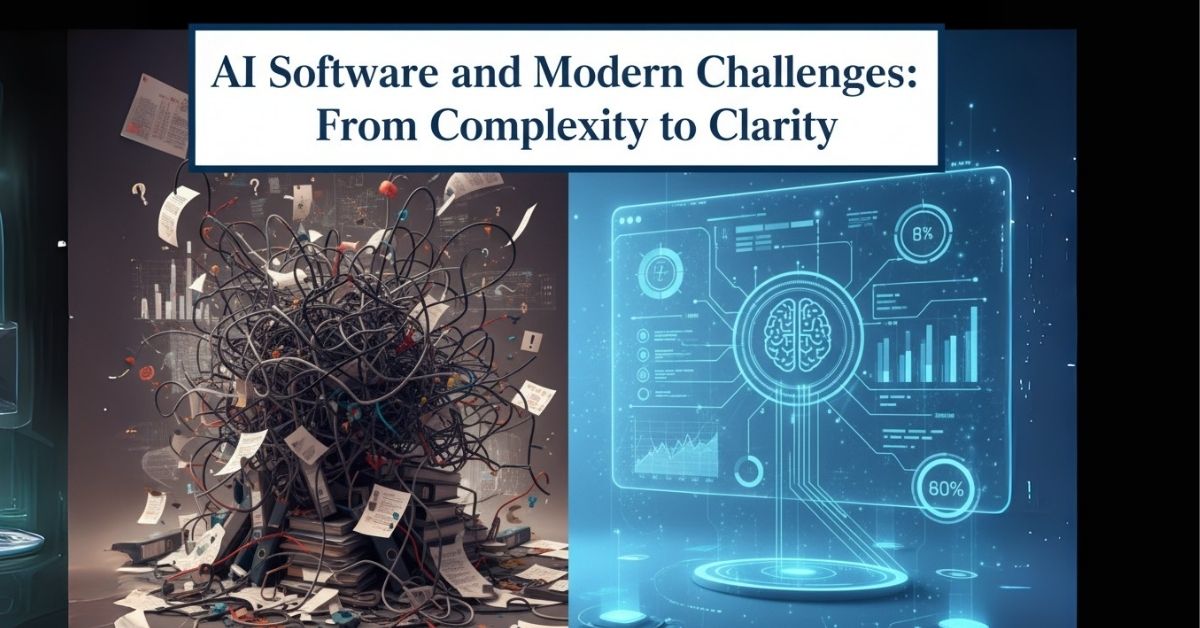
Modern businesses face challenges that are bigger, faster, and more complex than ever before. From handling massive datasets to delivering seamless customer experiences, companies are under pressure to move quickly without sacrificing quality. This is where AI software Development emerges as a problem-solver, helping organizations cut through complexity and find clarity in decision-making, operations, and growth strategies.
But what does this really mean for businesses today? Can AI software truly make things simpler, or is it just another layer of complexity? This article explores the role of AI in solving modern challenges and how businesses can harness it to create clarity and impact.
Understanding the Complexity of Modern Business Challenges
Today’s organizations are navigating:
- Data Overload: Millions of interactions, transactions, and records that need real-time analysis.
- Market Uncertainty: Rapid shifts in customer behavior and unpredictable global trends.
- Operational Inefficiency: Manual processes that slow down innovation and scalability.
- Customer Expectations: Consumers demand faster, smarter, and more personalized services.
Traditional approaches are struggling to keep up. That’s why companies are now turning to AI software development to not only manage but also simplify these challenges.
How AI Software Brings Clarity
AI-driven tools transform complex problems into actionable insights. Here’s how:
1. Data Simplification
AI organizes raw, unstructured data into clear patterns and predictions, helping leaders make smarter decisions without drowning in spreadsheets.
2. Automation of Repetitive Tasks
Instead of teams spending hours on routine tasks, AI automates them—freeing human talent for creative and strategic work.
3. Predictive Analytics for Strategy
By learning from past data, AI forecasts trends, reduces uncertainty, and guides companies toward better growth opportunities.
4. Enhanced Customer Experience
From chatbots to personalization engines, AI enables businesses to engage customers with speed and precision.
5. Scalability Made Simple
AI allows businesses to grow operations without proportionally increasing resources, reducing both costs and complexity.
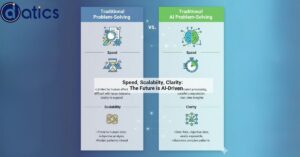
AI Software vs. Traditional Problem-Solving Approaches
Traditional methods often rely on human analysis, lengthy development cycles, and manual troubleshooting. While reliable in structured environments, they are too slow for today’s fast-paced market.
By contrast, AI software uses real-time analysis, machine learning, and intelligent automation to anticipate problems before they escalate. For example, predictive AI can alert a logistics company about potential supply chain delays before they even occur.
This ability to move from reactive to proactive problem-solving is what makes AI a game-changer.
Real-World Applications of AI Software in Overcoming Challenges
1. Healthcare
AI algorithms detect patterns in medical images, helping doctors diagnose diseases faster and more accurately.
2. Finance
AI-powered fraud detection systems identify suspicious activities in real-time, reducing financial risks.
3. Retail
AI software personalizes shopping experiences, increasing sales while reducing decision fatigue for customers.
4. Manufacturing
Predictive maintenance powered by AI ensures machines run smoothly, minimizing downtime and costs.
5. Startups and SaaS
AI helps startups validate product-market fit quickly by analyzing data-driven customer insights—turning risky assumptions into informed strategies.
How AI Software Helps Businesses Move from Complexity to Clarity
One of the greatest advantages of AI is its ability to turn messy, complex challenges into structured solutions. A prime example is the way AI accelerates product development. Instead of relying entirely on traditional methods, companies like Datics.ai integrate AI-driven development processes that cut timelines, reduce manual effort, and enhance accuracy.
For businesses unsure where to begin, adopting AI may feel overwhelming. But as highlighted in this article on innovation transforming challenges into opportunities, the key is to view AI not as a disruption but as a bridge—transforming difficulties into scalable opportunities.
Overcoming Resistance to AI Adoption
Despite its potential, businesses sometimes hesitate to adopt AI software. Common concerns include:
- Fear of high costs
- Lack of technical expertise
- Uncertainty about data security
- Skepticism around automation replacing human jobs
However, most of these challenges can be addressed with the right strategy. For instance, starting with small AI-driven projects, partnering with AI software development experts, and ensuring transparency in implementation can build trust and clarity across the organization.
Future Outlook: AI Software as a Clarity Engine
As industries grow more complex, AI software will not just be an option—it will be a necessity. The companies that succeed in the future will be those that learn to use AI as a tool to cut through noise, make faster decisions, and keep customers at the center of innovation.
AI isn’t about replacing humans. It’s about empowering businesses to solve problems in ways that were previously impossible, moving from uncertainty to confidence, from confusion to clarity.
FAQs
1. What is the role of AI software in problem-solving?
AI software simplifies data, automates processes, and predicts outcomes, making it easier for businesses to solve problems faster.
2. Can AI replace traditional problem-solving methods?
Not entirely. AI complements traditional methods by enhancing speed and efficiency while humans provide oversight and creativity.
3. Is AI software development expensive?
Initial investments may be high, but long-term savings from automation and scalability often outweigh costs.
4. Which industries benefit most from AI software?
Healthcare, finance, retail, manufacturing, and SaaS companies see significant gains from AI adoption.
5. How does AI bring clarity to business operations?
By organizing complex data, automating routine tasks, and providing predictive insights that guide decision-making.