

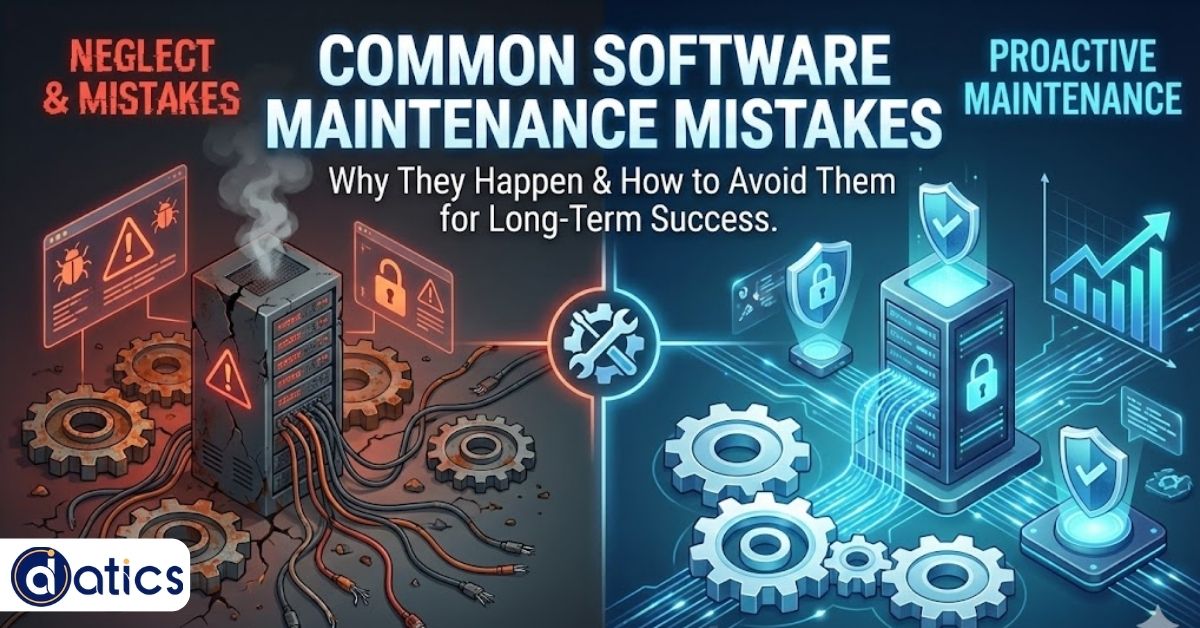
Software maintenance is often overlooked, especially when businesses are caught up in the excitement of launching a new product. However, Datics Solutions LLC emphasizes that ongoing maintenance is critical for ensuring a product remains stable, secure, and fully functional as it evolves. Without regular attention, even the most well-built products can suffer from bugs, performance issues, or security vulnerabilities over time.
For beginners, understanding the value of software maintenance services and recognizing common mistakes during this phase is crucial. It’s the first step toward building a resilient, long-lasting product. In this guide, we’ll discuss the key mistakes businesses often make during software maintenance and provide actionable strategies to avoid them, ensuring that your product remains reliable as it grows.
Why Software Maintenance Is Often Overlooked
After a product launch, businesses often shift their focus to growth and user acquisition, leaving maintenance behind. This is a mistake. Without consistent maintenance, even the most well-built software can become outdated, vulnerable to security breaches, or riddled with performance issues.
Software maintenance goes beyond fixing bugs. It involves updating the system, improving features, enhancing security, and adapting the software to meet evolving user needs. When businesses neglect maintenance, they risk creating a negative user experience that erodes trust and leads to higher churn rates.
Common Software Maintenance Mistakes
Many businesses underestimate the importance of software maintaining services and make critical mistakes. Let’s examine some of the most common errors:
1. Neglecting Regular Updates
One of the most common mistakes is failing to update software regularly. Security vulnerabilities, performance improvements, and new features are introduced with updates. Without them, products become increasingly vulnerable to issues that could have been easily addressed.
Updating software on a regular schedule ensures it stays secure, functional, and relevant to users’ needs.
2. Ignoring User Feedback
A critical part of software maintenance is listening to the users. Ignoring feedback can result in a product that no longer meets the needs of its users. Regular updates should include improvements based on real-world usage and feedback.
For beginners, implementing a system to gather user feedback can help guide future updates and prioritize maintenance efforts. This can be done through surveys, in-app feedback forms, or monitoring user behavior.
3. Overlooking Security Patches
As cyber threats evolve, so must the security measures in your software. Failing to implement necessary security patches can lead to vulnerabilities that can be exploited. Software security is not something to be addressed only after a breach occurs it must be continuously monitored and improved.
Ensuring that your software is protected against the latest threats is essential to maintaining trust with your users. Failing to do so can result in costly breaches and loss of user confidence.
4. Underestimating the Cost of Poor Maintenance
Businesses often see software maintenance as an unnecessary cost, but it’s an investment in the product’s future. Neglecting maintenance can result in costly repairs, security issues, and even the complete failure of the product.
By proactively maintaining the product, businesses save money in the long run by avoiding expensive overhauls and downtime.
5. Failure to Scale Maintenance with Product Growth
As the product grows, so does the need for maintenance. Businesses sometimes fail to scale their maintenance efforts to keep up with new features, user demands, and technical requirements. This leads to inefficiencies and performance bottlenecks.
For a growing business, it is essential to ensure that the maintenance team or plan evolves along with the product. This might include expanding the team, automating some maintenance tasks, or investing in tools that can monitor system health.
How Ongoing Maintenance Improves Product Stability and Trust
Ongoing software maintenance helps businesses build long-term trust with their users. When a product is consistently updated, users know they are receiving a secure and reliable service. Regular maintenance reduces bugs, improves performance, and enhances user experience, all of which contribute to a higher retention rate.
For beginners, incorporating regular maintenance into the product lifecycle is a best practice that should not be neglected. It helps keep your product stable and trusted by users, ensuring continued success.
The Consequences of Neglecting Maintenance
Neglecting maintenance often results in products that are difficult to use, insecure, and prone to failure. These issues can damage a company’s reputation and lead to a decrease in customer satisfaction.
When teams do not prioritize maintenance, they risk losing customers to competitors who are investing in their products’ longevity and performance.
How to Avoid These Common Mistakes
Avoiding the common mistakes above is essential for businesses that want to ensure their software is running smoothly for the long term. Here are some strategies for implementing effective software maintenance:
- Set a Regular Maintenance Schedule: Make maintenance part of your product lifecycle, ensuring updates, security patches, and user feedback are consistently incorporated.
- Engage with Your Users: Use feedback to guide improvements and prioritize maintenance tasks that will have the greatest impact on your user base.
- Automate Where Possible: Automate testing, monitoring, and even some update processes to improve efficiency and minimize human error.
By following these best practices, you’ll be better equipped to keep your product running smoothly and avoid the pitfalls that many businesses fall into.
Conclusion
Software maintenance is a vital part of a product’s lifecycle that ensures the product remains secure, reliable, and relevant. By avoiding common mistakes like neglecting regular updates, ignoring user feedback, and overlooking security patches, businesses can build stronger, more sustainable products.
For beginners, understanding the importance of maintenance early and implementing best practices will pay off in the long run by reducing costs and improving user satisfaction.
If you’re looking for software maintaining services, ensure that your approach is both proactive and responsive to the needs of your users. Continuous maintenance is not an after thought, it’s an ongoing commitment to your product’s long-term success.
FAQs
What is the difference between software maintenance and software updates?
Software maintenance includes ongoing updates, bug fixes, security patches, and performance improvements to keep the product running smoothly.
Why is software maintenance important for businesses?
It helps ensure the product remains secure, reliable, and relevant over time, improving user trust and reducing risks.
How often should software be maintained?
Software should be maintained on a regular schedule, with updates, security patches, and user feedback incorporated regularly.
Can neglecting maintenance lead to product failure?
Yes, neglecting maintenance can lead to performance issues, security vulnerabilities, and loss of user trust, ultimately harming the product.
What are the first steps in implementing software maintenance?
Start by setting a maintenance schedule, gathering user feedback, and prioritizing updates and security patches based on importance.