

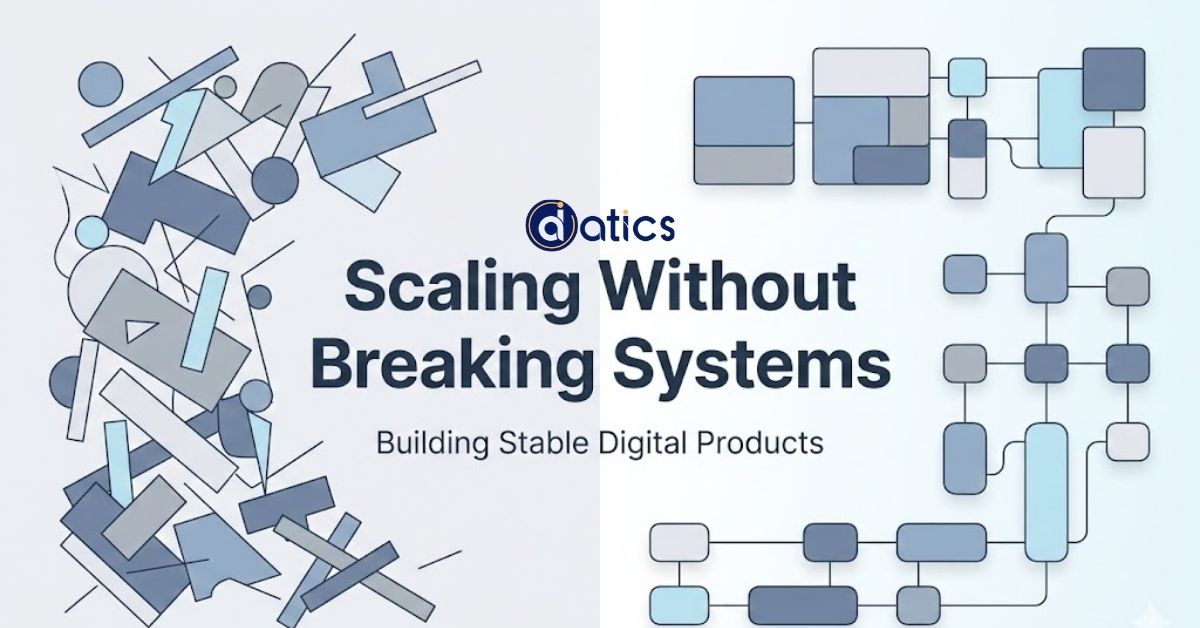
Scaling digital products can feel like a daunting challenge, especially when the pressure is high to grow quickly. However, scaling isn’t just about increasing your product’s user base or adding more features it’s about doing so in a way that doesn’t compromise the core functionality of your product or overwhelm your team. When scaling is rushed or poorly executed, it often leads to technical debt, system failures, and a drop in user satisfaction.
For beginners, scaling may seem like a distant problem, but understanding how to scale early on can prevent many of these issues from arising later. Learning how to scale with intention helps businesses maintain stability while reaching new heights.
Early Signs Your Product Is Ready to Scale
Before diving into scaling, it’s essential to recognize when your product is truly ready for it. Scaling prematurely can overwhelm your systems, lead to inefficiencies, and create unnecessary stress on your team. However, waiting too long to scale can mean missed opportunities and a bottleneck that prevents growth.
Key signs that your product is ready to scale include:
- Increased demand: Your product is consistently receiving more users or more traffic than it was originally designed for.
- Stable performance: Your product’s infrastructure can handle your current load without performance degradation.
- Validated product-market fit: You’ve confirmed that your product solves a real problem and has a growing user base that’s willing to pay for it.
Once these indicators are clear, it’s time to start planning for scaling.
Scaling Challenges Fast-Growing Software Companies Face
While scaling is exciting, it comes with unique challenges. As your software company grows, so does the complexity of your operations. Scaling too quickly or without a clear strategy can create bottlenecks that slow progress or cause service disruptions.
Common Challenges Include:
- Increased operational costs: As you scale, you may face rising operational costs, particularly with increased customer support needs or infrastructure expenses.
- System instability: Scaling without proper planning can lead to technical debt, performance issues, or even system crashes as your infrastructure struggles to support increased traffic.
- Team alignment: As your team expands, maintaining clear communication and alignment across departments becomes more challenging, leading to inefficiencies.
- Data management: Managing larger volumes of data while ensuring accuracy and consistency becomes more complex as your product grows.
Addressing these challenges early on requires foresight and careful planning, which can be achieved with a solid scaling strategy.
Why Scaling Without Automation Slows Growth
Automation is one of the most powerful tools for scaling digital products. It helps reduce manual work, streamline operations, and create systems that can support growth without exponentially increasing overhead costs.
Without automation, businesses may find that their teams are constantly bogged down with repetitive tasks, such as manual data entry or responding to simple customer queries. These tasks divert attention from higher-value work, leading to delays and inefficiencies.
In fact, scaling without automation often means scaling your team instead of scaling your systems, which can be an unsustainable approach as demand grows.
For beginners, automation services like workflow automation, data synchronization, and customer service automation can save time, improve efficiency, and enable your team to focus on higher-level strategic work.
How Automation Helps Scale Without Breaking the System
Automation allows teams to streamline workflows and processes, making it easier to handle more users, more data, and more complexity without compromising performance.
Here’s how automation supports scaling:
- Consistency: Automation ensures that tasks are done the same way every time, eliminating human error and ensuring consistency in user experience.
- Scalability: By automating routine tasks, you free up resources to handle growth without overburdening your team.
- Faster decision-making: Automation helps in data-driven decision-making by providing real-time insights into performance, allowing faster reactions to market or product shifts.
As Datics Solutions LLC advises, introducing automation at the right time can enable companies to scale smoothly and sustainably, setting the stage for long-term success.
Why Software Maintenance Is Critical After Product Launch
While scaling, maintenance is often overlooked, but it plays a critical role in ensuring the long-term health of your product. Scaling isn’t just about growing; it’s about maintaining the systems you already have while adding new capabilities.
Why Software Maintenance Is Critical After Product Launch explains how continual maintenance supports scaling by keeping your systems stable, secure, and optimized. Without proper maintenance, your product’s performance can degrade, and its ability to handle new users and features will be compromised.
A balance between scaling and maintaining your systems is essential for healthy, sustainable growth.
Conclusion
Scaling digital products is a delicate balance of expanding capacity while maintaining stability. Innovation alone won’t get you there. A strategic approach that includes automation, robust systems, and careful product direction ensures that growth happens without breaking the product.
For beginners, understanding the signs of readiness, preparing for common scaling challenges, and integrating automation early on helps avoid critical failures during growth. By scaling thoughtfully, you can ensure that your product can handle the increased demand while providing a consistent, high-quality experience for your users.
FAQs
What does it mean to scale a digital product?
Scaling a digital product means growing its user base, functionality, and capacity while maintaining stability and performance.
When is the right time to scale my product?
The right time to scale is when your product is experiencing consistent demand, has a stable infrastructure, and has achieved product-market fit.
Why is automation important for scaling?
Automation helps businesses streamline processes, reduce manual work, and improve efficiency, enabling faster and more sustainable growth.
What challenges do companies face when scaling their product?
Challenges include rising operational costs, system instability, misalignment across teams, and managing increasing volumes of data.
How can maintenance support scaling efforts?
Proper maintenance ensures that your product’s systems remain stable, secure, and optimized while supporting new users and features.