

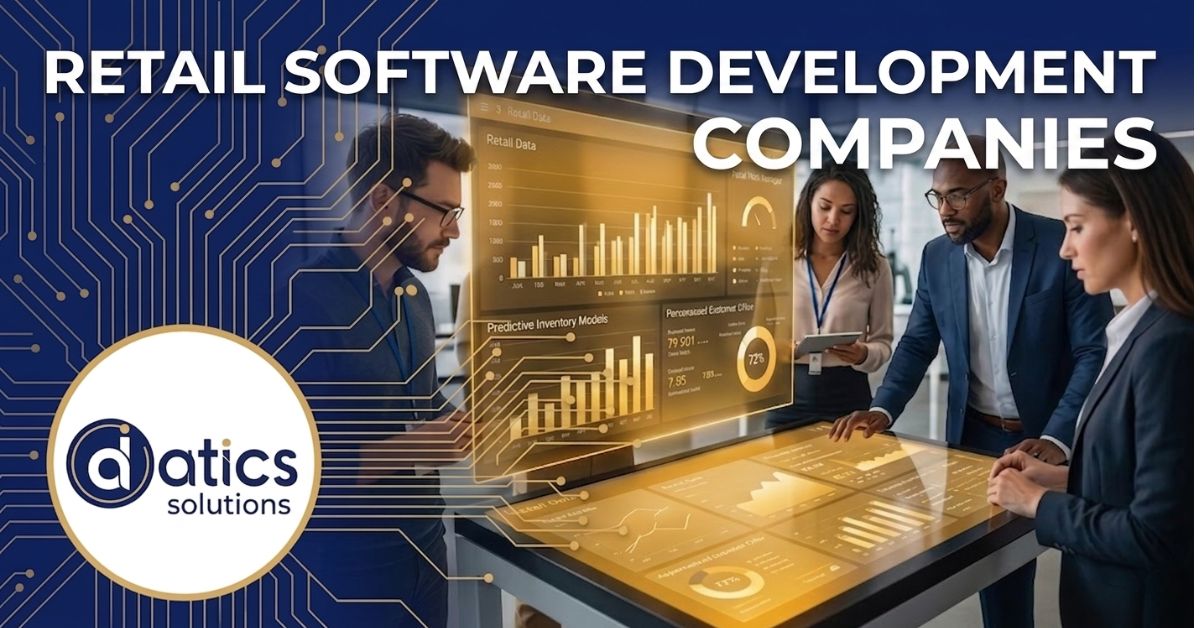
The physical and digital storefronts of 2026 are no longer separate business units. For modern enterprises, retail survival requires a single, continuous ecosystem where inventory, customer data, and employee workflows are fully unified. As merchant margins face pressure from shifting economic conditions and evolving consumer expectations, static point-of-sale setups are giving way to intelligent, responsive architectures designed by top retail software development companies.
Artificial intelligence has shifted from a novelty to the primary operational engine of retail infrastructure. Today’s brands use smart automation to predict localized demand patterns, automate checkout experiences, and deliver real-time personalized offers. This transformation is about removing friction from the buyer’s path while creating highly resilient, efficient store operations.
The Convergence of Unified Commerce Platforms
The foundational challenge for traditional retailers has been fragmented data. When online shopping carts, physical store inventory, and customer loyalty profiles live in separate databases, operational bottlenecks are inevitable. Modern unified retail platforms solve this by creating a real-time, singular source of truth for the entire business.
This structural shift allows for true omnichannel fluidity, such as buying online and picking up in-store (BOPIS) with perfect accuracy, or returning an e-commerce purchase to a physical kiosk without administrative delays. Partnering with a proven retail software development company in the USA ensures that these complex point-of-sale (POS) integrations, inventory APIs, and CRM databases work together seamlessly, allowing brands to scale operations securely across multiple geographic regions.
Hyper-Personalization and the Next-Generation Loyalty Model
The generic discount email is obsolete. In 2026, retail software leverages real-time data and contextual indicators like current local weather, past browsing history, and real-time in-store location to craft personalized customer experiences. If a loyalty member enters a physical location on a rainy afternoon, the store’s mobile application can deliver a tailored notification for an item that complements a recent online purchase.
At Datics Solutions LLC, we emphasize that modern consumer loyalty is built through relevant, timely engagement. AI models can analyze purchase velocities to predict exactly when a consumer is running low on a specific product, automatically prompting them with a frictionless reorder option. This shifts the merchant from a passive vendor to an intuitive assistant, maximizing customer lifetime value (LTV).
[In-Store Foot Traffic] + [E-Commerce History]
│
▼
[AI-Driven Retail Engine] ──► [Predictive Stocking Requests]
│
▼
[Hyper-Personalized Mobile Offers]
Smart Store Operations and Autonomous Inventory Optimization
Inventory mismanagement, either through overstocking or unexpected stockouts, costs the retail sector billions in lost revenue annually. Smart retail software minimizes this risk by deploying predictive demand forecasting models. These algorithms review historical sales data alongside external signals like local event schedules, macroeconomic trends, and supply chain timelines to calculate optimal inventory levels down to specific product variations.
On the showroom floor, computer vision and smart shelf sensors track inventory levels in real-time. If a popular item is misplaced or running low on a shelf, the system automatically alerts store associates via handheld devices. This ensures high-velocity items remain accessible to customers, improving on-floor productivity and protecting on-site profit margins.
The Automation of Checkout and Loss Prevention
The checkout line remains a primary pain point in the physical retail journey. To alleviate this, modern software utilizes computer vision, RFID tracking, and secure mobile wallets to enable autonomous or semi-autonomous checkout spaces. Customers can scan items on their mobile devices or pass through intelligent exit gateways that automatically finalize transactions, completely eliminating traditional queue times.
Simultaneously, these vision-based systems serve as advanced loss-prevention tools. Machine learning models can differentiate between accidental scanning mistakes and intentional fraud at self-checkout terminals. By addressing shrinkage proactively and improving transaction speeds, retailers can optimize their physical layouts, reallocate floor staff to dedicated service roles, and foster a shopping environment built on trust, efficiency, and speed.
Frequently Asked Questions
How do retail software development companies handle data security for consumer payment processing?
Top retail software development companies protect sensitive financial data by implementing a strict “Zero Trust” architecture alongside end-to-end encryption. In 2026, these systems rely heavily on payment tokenization, replacing raw credit card numbers with randomized digital tokens during transactions. Platforms must strictly comply with global security standards like PCI-DSS and regional privacy regulations to ensure all consumer information remains fully secure.
What is “Unified Commerce,” and how does it differ from standard Omnichannel retail?
While omnichannel retail connects multiple shopping channels (like a website, a mobile app, and a physical store), the underlying data often remains in separate, distinct silos. Unified commerce takes this a step further by utilizing a single, centralized software platform to track all channels in real-time. This eliminates data lag, ensuring inventory adjustments, customer interactions, and financial records update instantly across the entire enterprise.
Can predictive inventory software reduce a retailer’s overall environmental and product waste?
Yes, predictive inventory software plays an essential role in retail sustainability. By utilizing machine learning to analyze precise historical demand and seasonal trends, the platform prevents merchants from over-ordering stock. This is highly valuable for grocery, fashion, and perishable goods retailers, as it significantly minimizes product expiration, reduces unnecessary warehouse storage overhead, and optimizes transportation logistics.
How does computer vision technology assist store associates on a day-to-day basis?
Computer vision works as a digital assistant for floor staff by continuously scanning shelves via overhead cameras. Instead of associates spending hours manually checking stock levels or hunting for misplaced items, the software automatically generates real-time tasks. It alerts employees when an item is out of stock, running low, or placed on the wrong shelf, maximizing overall operational efficiency.
What is the typical deployment timeline for a modern AI-driven POS system?
A standard deployment timeline ranges from 3 to 6 months, depending on the number of retail locations and the complexity of existing legacy databases. Most enterprises opt for a phased modular implementation. This strategy involves upgrading core data frameworks and inventory engines first, followed by a gradual rollout of customer-facing features like automated checkouts or personalized loyalty apps to prevent operational downtime.