

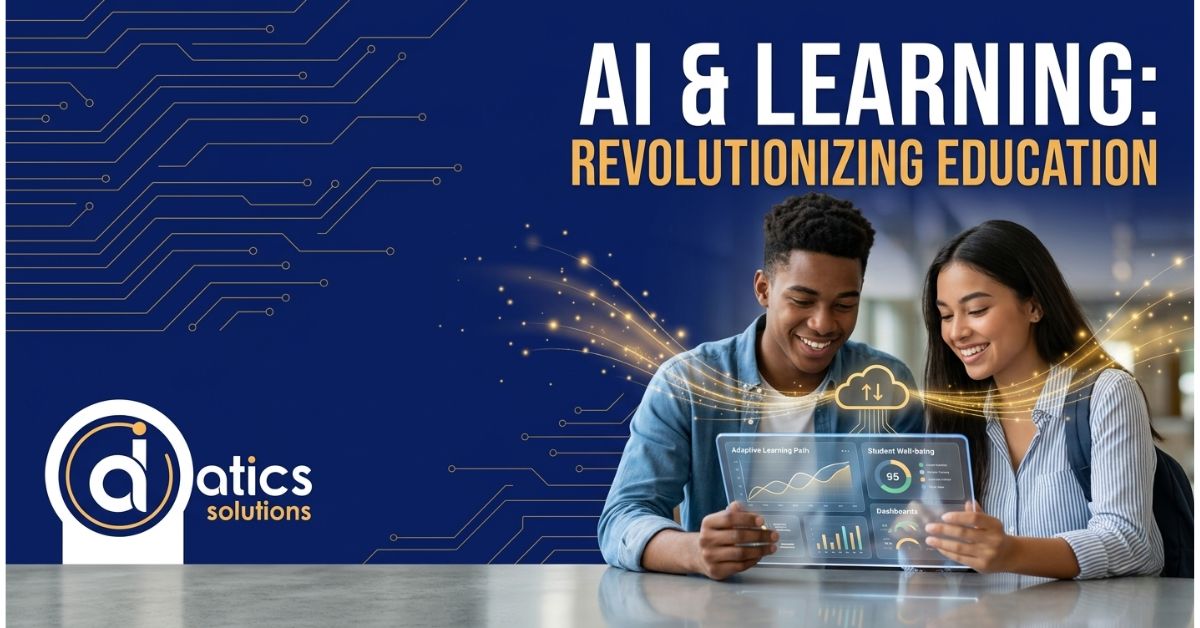
The educational landscape in 2026 has reached a pivotal tipping point. We have moved beyond the initial shock of generative tools into a sophisticated era of “agentic learning,” where software doesn’t just provide information; it actively orchestrates the academic journey. For institutions across the USA, the focus has shifted from simple digitization to the integration of comprehensive systems from leading education software companies to solve chronic engagement gaps and administrative burnout.
This revolution is particularly felt in how we bridge the divide between K-12 foundations and professional workforce readiness. By leveraging adaptive engines and predictive analytics, modern platforms are transforming passive classrooms into dynamic hubs of personalized growth. The vehicle for this change is no longer a static textbook but a living digital ecosystem that evolves alongside every learner.
The Rise of Hyper-Personalized Learning Paths
One of the most significant shifts in modern pedagogy is the death of the “average” student model. Every learner has unique cognitive anchors and pacing requirements that a single instructor cannot address simultaneously for thirty different individuals. AI-driven adaptive learning engines now analyze performance signals in real-time to adjust the difficulty and style of content delivery.
For a student struggling with algebraic concepts, the software might pivot from text-heavy explanations to interactive 3D modeling or gamified challenges. This “moment-to-moment” instruction ensures that learning gaps are closed before they become permanent barriers to progress. To implement such high-stakes personalization, many school districts are turning to a specialized education software development company in USA to build custom adaptive frameworks that align with state-specific curriculum standards.
Automating the Administrative Burden
Academic management has historically been weighed down by “invisible work,” such as attendance tracking, grading repetitive assessments, and manual resource allocation. In 2026, smart management systems have automated up to 40% of these tasks. AI agents now handle the first pass of grading for objective assessments and provide instant feedback on student essays, flagging areas for improvement before a human teacher ever sees the draft.
This automation isn’t about replacing the educator; it’s about reclaiming their time for mentorship and critical thinking. At Datics Solutions LLC, we recognize that the most successful educational technology is that which empowers teachers to focus on the human elements of instruction, motivation, empathy, and creative problem-solving while the software maintains the operational pulse of the institution.
Predictive Analytics for Student Well-being
Beyond grades, modern academic management is increasingly focused on the “whole student.” Predictive models now cross-reference attendance data, participation metrics, and even sentiment analysis from digital interactions to identify students at risk of disengagement or mental health struggles.
By flagging these patterns early, counselors and administrators can intervene with targeted support rather than waiting for a student’s performance to drop. This proactive approach to “social-emotional learning” (SEL) is becoming a cornerstone of American educational policy, ensuring that the digital infrastructure supports not just academic success but the overall well-being of the student body.
The Shift Toward Micro-Credentials and Skills-Based Mastery
The standard four-year degree is no longer the only metric of success. In 2026, the “skills economy” is driving a surge in micro-learning and nano-learning modules. These bite-sized educational units allow students and working professionals to gain specific, job-relevant skills that are immediately verifiable via blockchain-based digital certificates.
This modular approach allows for lifelong learning that fits into the gaps of a busy professional schedule. Educational platforms are now integrating directly with HR suites and job markets, creating a seamless pipeline from skill acquisition to employment. As these digital badges become a global standard for trust, the software managing them must be robust, secure, and infinitely portable, reflecting a future where what you can do is more important than where you sit.
Frequently Asked Questions
How do adaptive learning engines differ from traditional online courses?
Traditional online courses often follow a “linear” path where every student sees the same videos and takes the same quizzes in the same order. Adaptive learning engines, however, are non-linear. They use AI to analyze a student’s responses in real-time. If a student masters a concept quickly, the system skips ahead; if they struggle, it provides extra resources or alternative explanations. It essentially acts as a 1-to-1 tutor that scales to thousands of students simultaneously.
Can AI-powered software really help with teacher shortages in the USA?
AI-powered software helps alleviate teacher shortages not by replacing teachers, but by significantly reducing their workload. By automating administrative tasks like attendance, basic grading, and lesson planning assistance, teachers can manage larger or more diverse groups without burning out. This improved “work-life balance” and the ability to focus on actual teaching make the profession more sustainable and attractive to new educators, helping to stabilize the workforce.
What is “agentic learning,” and how does it change the student experience?
“Agentic learning” refers to AI systems that act as “learning companions” rather than just content delivery tools. These AI agents can prompt students with thought-provoking questions, help them brainstorm project ideas, or guide them through complex research tasks. Instead of just answering, the agent helps the student find the answer themselves, fostering a sense of agency, curiosity, and independent critical thinking that is vital for success in the 2026 job market.
How does blockchain technology ensure the security of academic credentials?
In 2026, paper diplomas will be replaced by digital certificates stored on a decentralized blockchain ledger. This makes them virtually impossible to forge or lose. When a student earns a micro-credential or a degree, the “hash” of that achievement is recorded on the blockchain. Employers can instantly verify the authenticity of the credential without needing to contact the original institution, making the hiring process faster and more secure for both parties.
Is the data collected by education software safe for students and minors?
Data privacy is the top priority for modern education software companies. Leading platforms in 2026 utilize “privacy-by-design” frameworks that comply with strict federal and state regulations like COPPA and FERPA. This includes end-to-end encryption and “data minimization” (only collecting what is necessary for learning). Many systems also use edge computing, where sensitive student data is processed locally on the device rather than being stored in a central cloud server.