

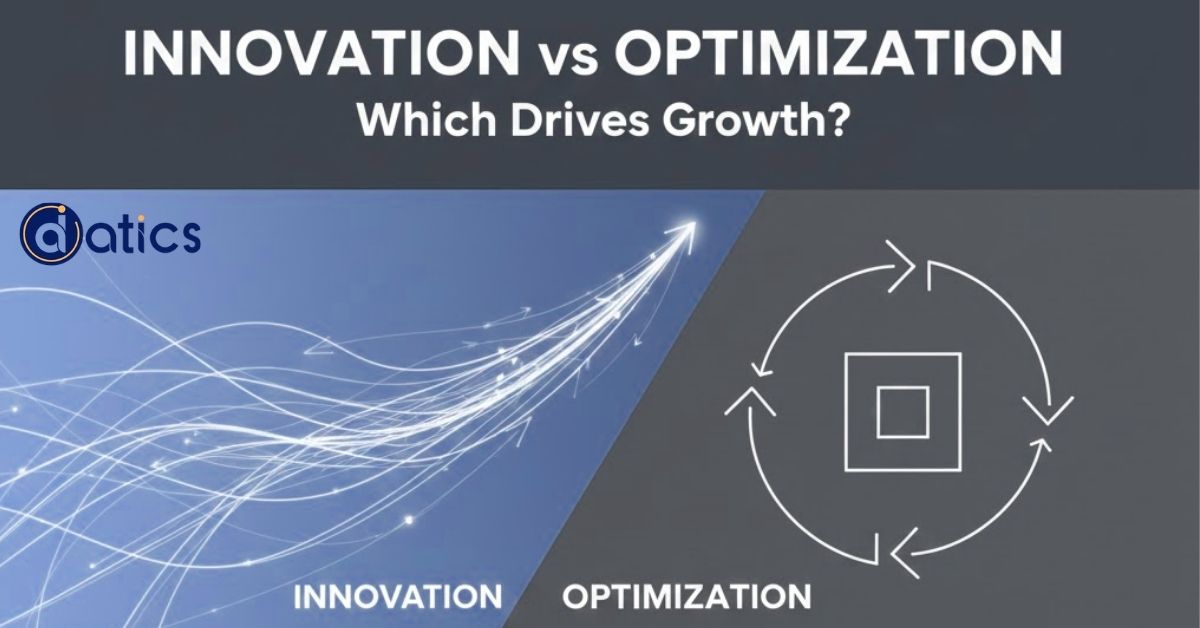
As products evolve, teams often face a strategic crossroads. Should they focus on innovation to introduce new ideas and capabilities, or should they optimize what already exists to improve performance and efficiency? For beginners, this distinction is not always clear, yet confusing the two can quietly slow growth.
Growth does not come from choosing innovation or optimization blindly. It comes from understanding how each approach contributes differently to progress and knowing when one matters more than the other. Products that grow sustainably tend to treat innovation and optimization as complementary forces rather than competing priorities.
Understanding Innovation in the Context of Product Growth
Innovation is about expanding what a product can offer. It involves introducing meaningful changes that improve how problems are solved or how value is delivered. In software development, innovation might appear as new workflows, smarter automation, or entirely new ways users interact with the product.
A structured innovation mindset helps teams think beyond incremental improvements. Innovation becomes most valuable when existing solutions no longer fully address user needs. Rather than reacting to trends, teams innovate to stay aligned with changing expectations.
For beginners, innovation should be understood as intentional evolution, not constant disruption.
What Optimization Means for Growing Products
Optimization focuses on refinement rather than expansion. It improves performance, usability, and reliability within an existing framework. Faster load times, clearer navigation, and smoother workflows are all examples of optimization.
Optimization often delivers visible results quickly. It strengthens what already works and removes friction that limits adoption or satisfaction. However, optimization does not change the underlying value proposition of a product. It assumes that the core idea is already correct.
For early-stage teams, optimization is most effective when the product direction is validated and user needs are well understood.
Why Innovation and Optimization Are Often Confused
The confusion between innovation and optimization usually comes from surface-level improvements. Teams may label small adjustments as innovation, even when those changes only refine existing features. This creates the illusion of progress without expanding impact.
Another reason for confusion is pressure. Beginners often feel the need to innovate continuously to appear competitive. As a result, they may overlook optimization opportunities that could deliver stronger short-term growth.
Understanding the difference helps teams avoid misaligned effort and focus on the type of change that truly supports growth.
When Innovation Becomes the Primary Growth Driver
Innovation drives growth when products reach a point where optimization no longer solves deeper problems. This often happens as markets mature or user expectations shift. At this stage, improving performance alone is not enough. The product needs new ways to deliver value.
Innovation opens new growth paths by addressing unmet needs or enabling new use cases. Without it, growth plateaus because the product remains confined to its original assumptions.
The long-term role of innovation in sustaining growth is discussed further How Innovation Shapes Long-Term Product Success
When Optimization Drives More Immediate Growth
Optimization drives growth when users already see value in the product but encounter friction. Improving speed, clarity, or reliability can significantly increase engagement and retention.
For beginners, optimization often feels safer because it builds on known strengths. It reduces risk and improves consistency. However, relying exclusively on optimization can delay necessary innovation if user needs are changing beneath the surface.
Optimization works best when it supports a product that is already aligned with its users.
Balancing Innovation and Optimization Over Time
Sustainable growth rarely comes from choosing one approach permanently. Successful products move intentionally between innovation and optimization as they mature. Innovation creates new opportunities, while optimization strengthens them.
Teams that grow consistently understand when to explore new ideas and when to refine execution. This balance prevents stagnation without overwhelming users with constant change.
For beginners, learning this rhythm early helps avoid extremes that slow progress or erode trust.
How Product Maturity Influences the Right Choice
The stage of a product plays a significant role in determining whether innovation or optimization should take priority. Early products often need innovation to clarify value, while growing products benefit from optimization to scale smoothly.
Ignoring product maturity can lead to misplaced effort. Innovating too early can create confusion, while optimizing too long can cause stagnation. Growth accelerates when teams align their approach with where the product truly stands.
This awareness allows teams to make informed decisions instead of reacting to pressure.
Making Growth Decisions as a Beginner Team
Beginners often assume that innovation is always the answer to growth challenges. In reality, growth depends on diagnosing the right problem. If users struggle with existing workflows, optimization may unlock growth faster. If the product no longer fits user needs, innovation becomes essential.
The key is clarity. Teams that understand whether they are refining value or redefining it make better growth decisions.
This balanced thinking reflects how Datics Solutions LLC approaches product strategy, where growth is driven by understanding rather than assumption.
Conclusion
Innovation and optimization both play essential roles in driving product growth. Innovation expands what a product can become, while optimization strengthens how it performs today. Growth slows when teams confuse the two or rely on one at the expense of the other.
For beginners, understanding this distinction early prevents wasted effort and misaligned decisions. Products that grow sustainably are those that innovate when necessary and optimize with intention, guided by clarity rather than pressure.
FAQs
What is the difference between innovation and optimization?
Innovation introduces new ways to deliver value, while optimization improves how existing value is delivered.
Which one drives growth faster?
It depends on the product stage. Optimization often delivers quick wins, while innovation enables long-term growth.
Can optimization replace innovation?
No. Optimization strengthens existing solutions but cannot address fundamental shifts in user needs.
Is innovation risky for beginner teams?
Innovation carries risk if done without clarity, but it becomes safer when grounded in real user insight.
How do teams know when to innovate or optimize?
By evaluating whether growth barriers come from execution issues or from outdated assumptions.