

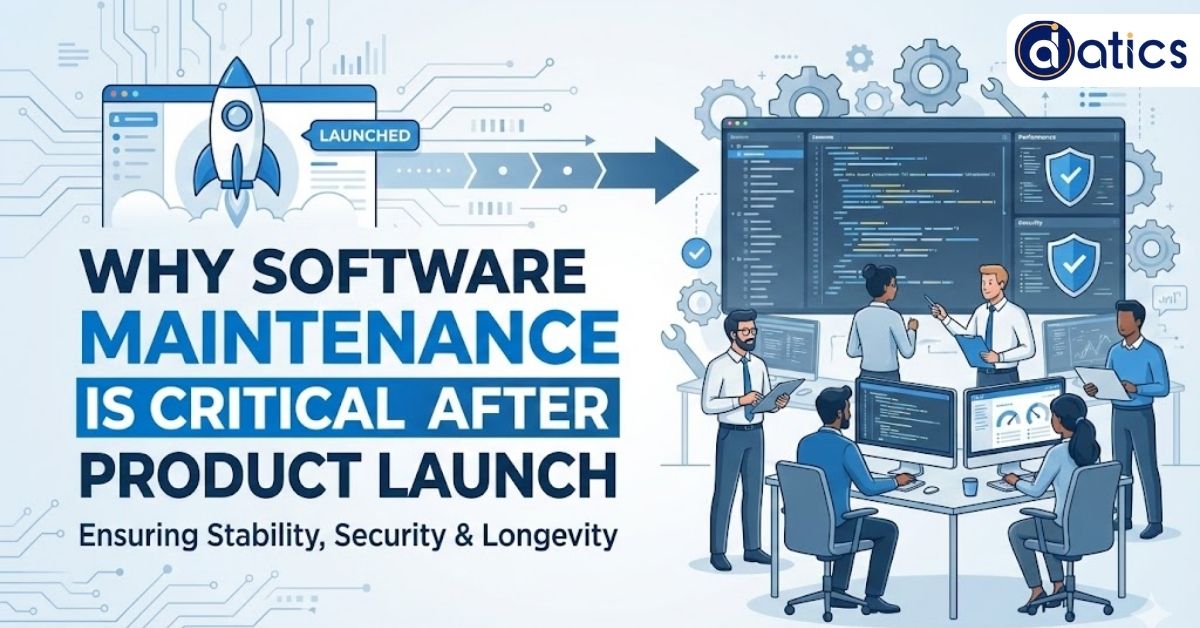
After launching a digital product, the work doesn’t stop. In fact, it’s just the beginning of a long journey to ensure that your product stays functional, reliable, and valuable to users. For many beginners, it’s easy to assume that once a product is launched, the focus shifts entirely to marketing, sales, and user acquisition. However, ongoing software maintenance is just as crucial for long-term success.
This post explains why software maintenance is not a one-time task but an essential, continuous part of your product’s lifecycle. It ensures that your product adapts to changing requirements, remains secure, and continuously meets user expectations. Without proper maintenance, even the most innovative product can quickly lose its relevance.
What is Software Maintenance and Why Is It Important?
Software maintenance involves updating, improving, and managing software after it has been deployed. This includes fixing bugs, making performance improvements, adding new features, and ensuring compatibility with evolving technologies and user needs.
For beginners, it’s important to view software maintenance as an investment in a product’s longevity rather than a mere afterthought. Maintenance prevents your product from becoming obsolete and keeps it in line with your company’s evolving goals.
The long-term value of a product depends heavily on how well it is maintained after launch. Products that don’t receive proper updates or ongoing fixes often face performance issues, security vulnerabilities, or user dissatisfaction, leading to poor retention and ultimately failure.
For example, Datics Solutions LLC offers professional software maintaining services that help businesses optimize their product’s performance and keep it aligned with user needs over time. This proactive approach is key to ensuring your product’s ongoing success.
Common Software Maintenance Mistakes Businesses Make
Many businesses underestimate the importance of software maintenance after product launch, leading to common mistakes that can affect their product’s success. Some of these mistakes include:
- Neglecting User Feedback: Ignoring feedback from users means missing valuable insights that could guide improvements. Without incorporating user input, products often fail to address real pain points, making innovation less effective.
- Delaying Updates: Post-launch updates should not be seen as optional. Delaying necessary updates can lead to security risks, performance degradation, and user frustration.
- Lack of Performance Monitoring: Failing to track the performance of your product post-launch means that issues may go unnoticed until they become critical.
- Overlooking Compatibility: As technology evolves, products need to stay compatible with new systems, devices, and platforms. Neglecting this can result in your product becoming outdated quickly.
By avoiding these common mistakes, businesses can ensure that their software remains effective, secure, and valuable in the long term.
How Ongoing Maintenance Improves Product Stability and Trust
Ongoing maintenance significantly enhances product stability by addressing issues before they escalate into major problems. Regular updates and fixes not only improve performance but also contribute to a smoother user experience, which fosters user trust.
Trust is critical for product success. Users expect reliable, consistent experiences. When a product fails to meet these expectations due to bugs, slow performance, or outdated features it loses user confidence. Ongoing software maintenance ensures that your product remains reliable, secure, and aligned with user needs, which helps maintain and build trust over time.
When Should You Start Software Maintenance?
It’s crucial to understand that software maintenance doesn’t begin once the product is live. Effective maintenance begins during the development phase and continues as the product is released. Having a clear maintenance plan in place ensures that any issues are addressed early, before they affect users.
The How Successful Products Are Built article discusses how strategic planning and continuous improvement set products up for long-term success. Software maintenance should be seen as part of that broader strategy, ensuring that the product continues to evolve in line with business and user requirements.
The Benefits of Regular Software Maintenance
- Enhanced Security: Regular maintenance ensures that security vulnerabilities are identified and patched before they can be exploited by malicious parties.
- Improved User Experience: By continuously fixing bugs, optimizing performance, and updating features, your product can provide users with an exceptional experience that leads to higher retention.
- Better Compliance: As regulations evolve, software maintenance helps keep your product compliant with industry standards and laws.
- Cost Efficiency: Fixing issues early through regular maintenance reduces the risk of major system failures that can result in costly fixes or downtime.
For beginners, viewing maintenance as an integral part of product development, rather than an optional task, sets the foundation for building a reliable, secure, and user-centric product.
Conclusion
Software maintenance is essential for ensuring the longevity and success of a product after launch. It is not merely about fixing bugs; it is about continuously improving the product to meet evolving user needs, market changes, and technological advancements.
For beginners, understanding the importance of ongoing maintenance early will help avoid common mistakes that can lead to product failure. Investing in proper software maintenance ensures that your product remains secure, reliable, and valuable, helping you build trust with your users and maintain competitive advantage.
FAQs
What is the purpose of software maintenance?
Software maintenance ensures that your product stays secure, updated, and aligned with user needs after launch.
When should software maintenance start?
Maintenance should begin during the development phase and continue throughout the product’s lifecycle.
How often should software maintenance be done?
It depends on the product, but maintenance should occur regularly whether through weekly, monthly, or quarterly updates depending on the product’s complexity and user needs.
What are the main types of software maintenance?
The main types are corrective (bug fixes), adaptive (ensuring compatibility), perfective (improvements), and preventive (avoiding future issues).
Can software maintenance be automated?
Yes, many aspects of software maintenance, such as performance monitoring and security patching, can be automated to improve efficiency.