

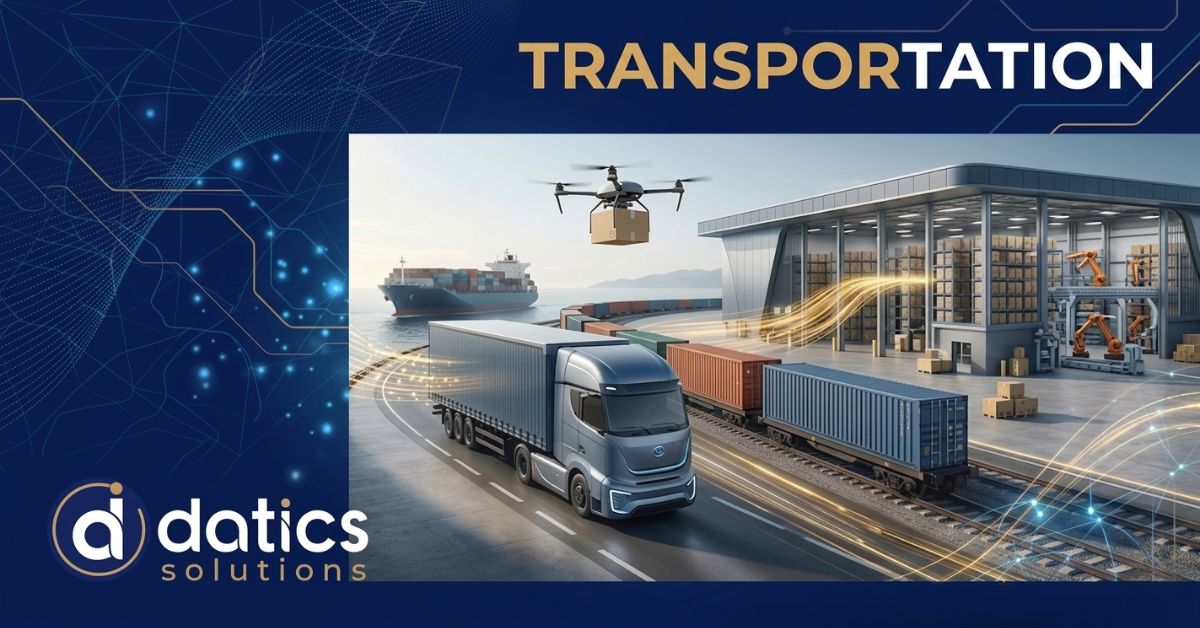
The global Transportation industry is currently navigating one of the most significant shifts since the invention of the steam engine. In 2026, the convergence of high-speed connectivity and advanced machine learning has moved us past the era of simple GPS tracking into a world of fully autonomous, self-healing supply chains. For businesses operating in the USA, where logistical efficiency is a primary driver of the economy, these advancements are not just upgrades—they are essential survival tools in a volatile market.
The move toward “Smart Logistics” is fueled by the need for extreme precision. In an age of instant gratification, consumers and businesses alike expect goods to move with absolute transparency and zero delay. Meeting these demands requires a level of data orchestration that is far beyond human capacity, making artificial intelligence the central nervous system of modern freight and transit.
Predictive Analytics and the End of Empty Miles
One of the most persistent inefficiencies in the Transportation sector has been the “empty mile”—trucks returning from deliveries without cargo. This inefficiency costs billions annually in fuel, labor, and carbon emissions. AI is solving this by using predictive demand modeling to synchronize loads in real-time. By analyzing historical shipping patterns, weather forecasts, and even local event schedules, algorithms can predict where a truck will be needed 24 to 48 hours before the need arises.
This predictive power extends to vehicle health through “Proactive Maintenance.” Instead of waiting for a breakdown, sensors embedded in engines and tires feed data into a central model that identifies the early warning signs of failure. This ensures that vehicles are serviced during scheduled downtime, preventing costly roadside repairs and maintaining the integrity of the supply chain.
Integrating AI into Complex Transit Ecosystems
Building a truly automated logistics network requires more than just smart vehicles; it requires an integrated software layer that can communicate with port authorities, warehouses, and final-mile delivery hubs. The complexity of these multi-modal systems is immense, which is why many industry leaders are looking for a specialized AI software developer for transportation in the USA to build custom interfaces that unify disparate data streams.
A custom-built solution ensures that the AI respects the specific regulatory and geographical constraints of the American market. Whether it is navigating the specific tolls of the Northeast Corridor or managing the temperature-sensitive logistics of the Midwest’s agricultural belt, localized intelligence provides a level of nuance that generic platforms cannot match. At Datics Solutions LLC, we recognize that the most effective AI is that which integrates seamlessly into the daily workflow of dispatchers and drivers, rather than complicating it.
The Evolution of Final-Mile Delivery and Autonomous Hubs
The “final mile” remains the most expensive and complex leg of any journey. In 2026, we are seeing a massive surge in automated sorting facilities and micro-fulfillment centers located closer to urban populations. These hubs use computer vision to sort thousands of packages per hour with zero error, prepping them for delivery via autonomous electric vans or specialized drones.
This shift is significantly reducing the carbon footprint of urban Transportation. By optimizing routes in real-time to avoid traffic congestion and school zones, AI is making city streets safer while simultaneously lowering the cost per delivery. For retail and e-commerce giants, this efficiency is the difference between a profitable quarter and a logistical bottleneck.
Security and Ethics in Autonomous Freight
As we cede more control to automated systems, the importance of cybersecurity and ethical programming has taken center stage. Protecting the integrity of a fleet’s navigation system is now a national security priority. Modern development focuses on “Redundant Intelligence,” where multiple models cross-verify decisions to prevent hijacking or system failures.
Furthermore, there is a deep focus on the “human-in-the-loop” philosophy. Even as trucks become more autonomous, the role of the human operator is evolving into that of a fleet supervisor. AI handles the grueling, long-haul highway miles, while humans take over for complex urban navigation and delicate cargo handling. This balanced approach ensures that technology augments human skill rather than simply replacing it, creating a more sustainable and resilient labor model for the future.
Frequently Asked Questions
How does AI specifically improve safety in long-haul Transportation?
AI improves safety through Advanced Driver Assistance Systems (ADAS) that monitor driver fatigue, lane departure, and blind spots in real-time. These systems can react faster than a human to avoid a collision, often applying brakes or adjusting steering before a driver even perceives the danger. Furthermore, by optimizing routes to avoid hazardous weather or high-traffic congestion, AI reduces the overall risk profile of every journey.
What is the expected ROI for implementing AI in a mid-sized logistics fleet?
Most logistics firms see a return on investment within 12 to 18 months. These gains primarily come from a 10–15% reduction in fuel consumption through better route optimization and a significant decrease in vehicle downtime due to predictive maintenance. Additionally, the ability to provide customers with “Exact-Time-of-Arrival” (ETA) tracking improves client retention and allows for premium pricing tiers for guaranteed delivery windows.
Will AI-driven automation lead to massive job losses in the trucking industry?
The industry is moving toward “Augmented Driving” rather than total replacement. There is currently a massive shortage of long-haul drivers in the USA; AI helps fill that gap by making the job less grueling. By handling the repetitive highway driving, AI allows drivers to focus on the more complex aspects of logistics and local navigation. This shift is expected to change the nature of the jobs, making them safer and more attractive rather than eliminating them entirely.
How does AI handle the varying state-by-state regulations in the USA?
Modern AI systems for Transportation are programmed with “Geofencing” and regulatory databases. As a vehicle crosses state lines, the system can automatically adjust its operating parameters to comply with local laws, such as speed limits, weight restrictions, or emissions standards. This reduces the administrative burden on the driver and prevents costly fines for the fleet operator, ensuring compliance is handled automatically and accurately.
How secure is the data being collected by smart logistics platforms?
Security is a top priority in 2026. Top-tier development teams implement end-to-end encryption for all telemetry data and use private cloud environments to ensure that a competitor cannot access your route or client data. Furthermore, many systems now use “Edge Computing,” where the data is processed locally on the vehicle rather than being sent to a central server, which significantly minimizes the “attack surface” available to hackers.