

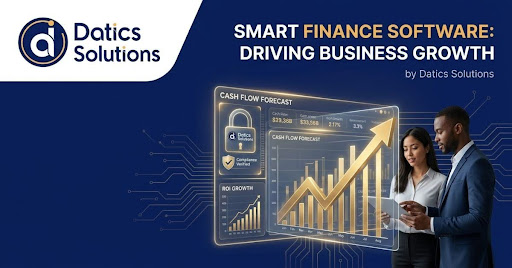
In the rapidly shifting economic landscape of 2026, the gap between market leaders and those struggling to keep pace is no longer defined by capital alone but by technical agility. For American enterprises, the ability to process financial data in real-time has evolved from a luxury to a baseline necessity. Modern organizations are moving away from reactive bookkeeping and toward proactive, intelligent ecosystems powered by advanced financial software development services.
As we navigate a year defined by high interest rates and increased regulatory scrutiny, the role of finance has transformed. It is no longer just a back-office function; it is the strategic engine of the company. Smart financial software provides the “eyes and ears” for leadership, offering a clear view of cash flow, risk, and growth opportunities that were previously obscured by manual processes and siloed data.
The Strategic Shift to AI-First Financial Architectures
The headline for financial systems in 2026 is the deep integration of “Agentic AI.” Unlike the simple automation of the past, these modern systems act as autonomous partners. They don’t just record transactions; they analyze spending patterns, predict future cash shortfalls, and even suggest optimal investment windows. This shift to an AI-first approach is allowing finance teams to move from data entry to high-value strategic analysis.
When a business invests in specialized financial software development in the USA, they aren’t just buying a tool; they are building a resilient foundation. Custom-built solutions ensure that the AI respects the specific tax codes, GAAP standards, and industry regulations unique to the American market. This localized intelligence is what allows a mid-market firm to compete with the reporting speed and accuracy of a global conglomerate.
Unlocking Growth Through Embedded Finance and APIs
One of the most significant growth drivers this year is the rise of “embedded finance.” By integrating financial services such as lending, insurance, or instant payments directly into their existing platforms, non-financial companies are creating entirely new revenue streams. A logistics firm can now offer instant invoice financing to its carriers, or a SaaS platform can provide integrated payroll services to its users.
This is made possible by modular, API-first architectures. At Datics Solutions LLC, we have seen that the most successful growth stories of 2026 involve companies that have broken down the walls between their financial data and their customer-facing products. When your financial software can “talk” seamlessly to your CRM and your supply chain management system, you eliminate the friction that typically kills scaling efforts.
Strengthening Trust with Modern Security and RegTech
In an era of sophisticated cyber threats and autonomous AI-powered fraud attempts, security is no longer a feature; it is the product. Modern financial software is now built on “zero-trust” principles, where every transaction and access request is continuously verified using behavioral biometrics and real-time anomaly detection.
Beyond security, regulatory technology (RegTech) is being built directly into the software stack. This automation handles the heavy lifting of compliance, from AML (Anti-Money Laundering) checks to real-time regulatory reporting. For businesses looking to scale internationally or participate in complex government contracts, this automated compliance is a massive competitive advantage, reducing the risk of human error and the astronomical costs associated with regulatory fines.
Real-Time Visibility: The Ultimate Competitive Edge
The speed of business in 2026 does not allow for “month-end” reporting delays. Decisions must be made in minutes, not weeks. Smart financial platforms provide real-time dashboards that offer a “single source of truth” across the entire organization. Whether it’s monitoring the burn rate of a new R&D project or tracking the ROI of a marketing campaign, leadership has instant access to the metrics that matter.
By embracing this level of transparency and intelligence, companies are finding that they can pivot faster than their competitors. They can identify a winning product line or a failing department early enough to take action. In the end, the future of finance isn’t just about managing money; it’s about managing the information that allows a business to grow with confidence, clarity, and speed.
Frequently Asked Questions
1. What is the difference between traditional accounting software and “smart” financial software?
Traditional accounting software acts as a digital ledger that records what has already happened it is historical in nature. “Smart” financial software is forward-looking; it uses machine learning and AI agents to forecast future trends, automate complex workflows like revenue recognition, and provide real-time insights. While traditional software tells you where your money went, smart software tells you where it is going and how to optimize it for growth.
2. How does embedded finance help a non-financial business grow its revenue?
Embedded finance allows you to offer financial products (like credit, insurance, or payments) directly within your own app or website. This keeps the customer in your ecosystem longer and allows you to capture a portion of the financial transaction fees that would normally go to a bank. It also adds a significant layer of value for your users, making your core product more “sticky” and creating a recurring revenue stream that is independent of your primary service.
3. Is it better to buy an off-the-shelf financial platform or invest in custom development?
Off-the-shelf solutions are great for standardized needs, but they often struggle with the unique data structures and complex workflows of a rapidly growing business. Custom financial software development services allow you to build a system that fits your specific business model perfectly. This eliminates “workarounds,” integrates more deeply with your existing tech stack, and provides a proprietary advantage that your competitors cannot simply buy from a third-party vendor.
4. How does “RegTech” integration save a company money in the long run?
RegTech (Regulatory Technology) automates the monitoring and reporting required by laws like PCI-DSS, SOC 2, or AML regulations. By building these checks directly into your software, you reduce the need for large, manual compliance teams and minimize the risk of human error. This not only prevents expensive fines but also speeds up your ability to enter new markets or onboard new clients, as the due diligence phase becomes almost instantaneous.
5. How secure is cloud-based financial software against AI-driven cyber attacks?
In 2026, top-tier financial software utilizes “Agentic Cybersecurity” AI that is specifically designed to fight other AIs. These systems monitor for unusual patterns in real-time, such as a login attempt from a new location combined with an unusual transaction size. By using end-to-end default encryption and behavioral biometrics, modern cloud-native systems are often far more secure than older “on-premise” servers that lack the same level of constant, automated patching and threat monitoring.